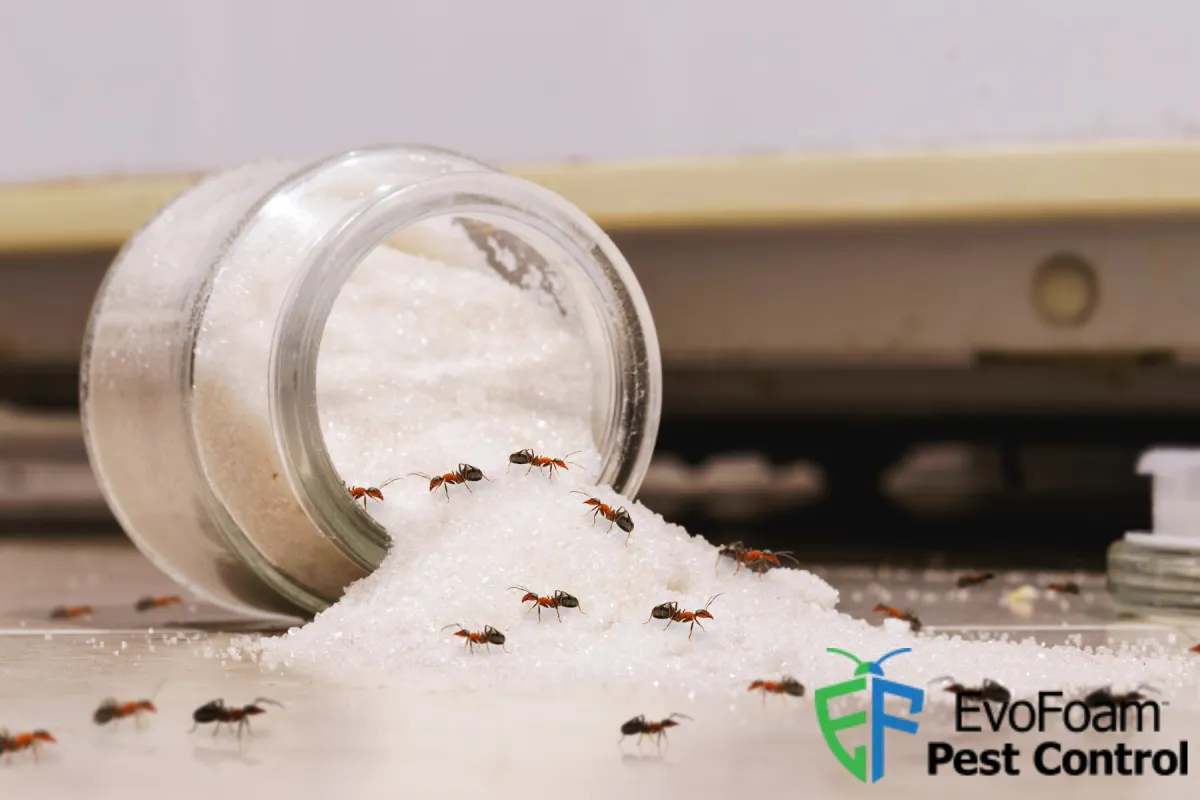
Foam-based pest treatments eliminate hidden ant colonies by expanding to fill deep structural voids, whereas traditional liquid treatments rely on gravity and often miss recessed nests. The expanding foam coats all internal surfaces of a wall cavity or pipe chase, forcing direct contact with the entire colony and its queen. This makes foam highly effective for total colony elimination in areas where liquids simply run off.
The Physics of Expansion: How Foam Reaches the Nest
To truly solve an insect problem, you have to look at where the pests are actually living. Ants rarely build their nests right out in the open. Instead, they seek out deep, dark, and hollow spaces inside our structures to keep their queens and eggs safe from danger. When a foraging insect finds its way into your home, it establishes a trailing network through tiny entry points hidden behind your drywall.
If you try to resolve this issue by using a traditional liquid treatment inside walls, the physical laws of gravity work against you. Liquid naturally flows straight downward along the path of least resistance, pooling at the bottom of a wall void and leaving the upper sections completely untouched. This is a massive issue because ant queens often nest high up inside wall framing or plumbing chases.
Our expanding foam completely changes this dynamic. When we apply treatment using a pressurized foam system, the material expands rapidly at a 30:1 ratio. This means a tiny amount of product grows to fill the space, moving upward, sideways, and into microscopic structural cracks. As the foam expands, it covers every hidden surface, ensuring that the entire colony makes direct contact with our green and safe pesticides.
Many homeowners ask themselves, how do foam-based pest treatments eliminate hidden ant colonies compared to traditional liquid treatment? The secret lies entirely in this structural expansion. By using the natural behavior of expanding bubbles, we can reach the absolute core of a nest that traditional methods simply bypass. This innovative approach is one of the reasons homeowners choose our pest control in Georgetown for effective, long-lasting ant solutions.
Comparing Foam-Based Treatments vs. Traditional Liquid Treatments
Because pests adapt so quickly to their surroundings, your choice of application method determines whether you achieve long-term relief or just a temporary fix. Combining a smart delivery mechanism with eco-friendly products creates a reliable shield for your property.
Treatment Performance Matrix
| Operational Feature | Foam-Based Pest Treatments | Traditional Liquid Treatments |
| Movement Pattern | Expands in all directions, filling 100% of the void. | Follows gravity, pooling at the lowest point. |
| Surface Adhesion | Clings to the underside of surfaces and internal pipes. | Runs off vertical surfaces quickly, leaving gaps. |
| Water Consumption | Uses minimal water, reducing environmental waste. | Requires high volumes of water to carry the product. |
| Void Penetration | Ideal for electrical boxes, weep holes, and wall voids. | Restricted to flat surfaces, baseboards, and soil. |
| Colony Contact | Forces immediate contact with the queen and nymphs. | Relies on worker ants randomly walking over the residue. |
Debunking the “More Liquid Means Better Exclusion” Myth
The Common Misconception: Drenching a foundation or wall cavity with gallons of heavy liquid insecticide is the most thorough way to wipe out an ant colony.
This is a persistent industry myth that leads to poor results and unnecessary environmental waste. Many property owners assume that flooding an area with a large volume of liquid ensures nothing survives. In reality, over-saturating a structure with liquid causes pests to panic and scatter.
When a heavy volume of liquid is applied, it cannot penetrate the tight, microscopic cracks where the center of the colony is nested. Instead, it only coats the outer edges of the void, creating a harsh, repellent barrier. This triggers a natural survival defense mechanism called “colony budding.” The worker insects panic, grab the eggs, and split the single colony into multiple, smaller sub-colonies hidden deeper inside your home. Within a few weeks, you end up with multiple active infestations instead of just one.
Applying Our Eco-Foam Void-Saturation Method to Solve This
To keep colonies from splitting and to ensure complete eradication, EvoFoam Pest Control developed our specialized advanced foam-based techniques. This modern methodology offers incredible innovative advantages over old-fashioned liquid options.
Our system relies on a systematic approach that focuses on finding the root source of the infestation rather than just wiping out the visible trails on your kitchen counter. We identify the exact micro-entry points around your property, such as brick weep holes, window frames, and plumbing access panels. Once these areas are located, we utilize our foam delivery system to achieve precise application and targeted elimination.
One of the greatest benefits of this approach is its reduced water usage. Traditional liquid applications require heavy amounts of water to carry products into the soil or structure, which can lead to runoff. Our system uses an airy, low-moisture foam matrix that minimizes water waste while providing enhanced penetration and accessibility into areas standard tools can never reach.
Furthermore, our system is completely safe for interior and exterior use. Whether we need to treat an outdoor patio gap or a delicate wall void behind an electrical outlet, the low-moisture foam safely breaks down into a dry residual layer without damaging insulation or drywall. This represents one of the latest advancements in modern, sustainable property protection.
How Local Construction Traits Impact Pest Control
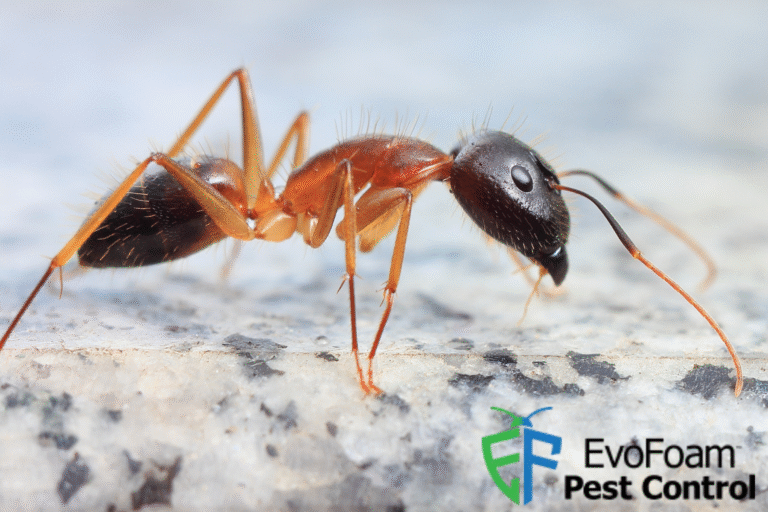
The way properties are built in Central Texas heavily influences how pests move indoors. For example, during a recent property evaluation for a home, our team found that sugar ants were entering through tiny gaps in the expansion joints of a concrete slab, trailing straight up into the kitchen island.
The hot, dry summer months regularly cause local soils to shrink and crack, creating subterranean highways for hungry insects searching for moisture inside air-conditioned spaces. Homeowners looking for a skilled exterminator in Georgetown, TX frequently notice that traditional exterior barrier treatments fail when ants travel deep beneath the foundation.
When we provide a comprehensive solution, we make sure to inspect every brick weep hole and utility line entrance. Property owners looking for dependable pest control in Georgetown, TX deserve a team that understands how local building practices can create hidden pest pathways, allowing us to deploy our expanding foam exactly where it will block future infestations.
Specifications and Features of Foam Technology
When protecting your home, the design of your defense plan matters for the safety of your family and pets. Below are the key specifications of our eco-friendly foam delivery system:
High-Expansion Co-Efficient
- Specification: 30:1 expansion ratio.
- Feature: Allows us to fill large plumbing chases and double-stud wall cavities while using a fraction of the moisture.
Non-Repellent Active Residues
- Specification: Undetectable transfer technology.
- Feature: Insects cannot smell or avoid our green and safe pesticides, allowing them to walk through the treatment and carry it back to the queen naturally.
Low-Moisture Polymer Base
- Specification: Eco-friendly drying agents and plant-based elements.
- Feature: Dries completely clean inside walls without causing wood rot, electrical shorts, or mold growth.
People Also Ask
Will the expanding foam ruin my home’s drywall or wall insulation?
No, professional pest control foam is a low-moisture “dry” foam. It is designed to expand, coat the inner surfaces of a wall cavity, and then safely collapse into a microscopic dry residual layer, leaving your drywall and insulation completely unharmed.
How long does it take for a foam-based treatment to destroy an entire ant colony?
The expanding foam provides an immediate physical block and knockdown for the insects it touches. The slow-acting residual matrix will typically fully collapse the hidden queen and the rest of the colony within 3 to 7 days.
Can traditional liquid treatments be safely applied inside home walls?
It is generally not recommended. Pumping heavy volumes of liquid inside walls can create pooling moisture pockets that lead to mold, damage insulation, and create electrical hazards. Low-moisture foam is the modern standard for safe internal void treatments.
Does this specialized foaming process also work for household trailing ants?
Yes, our expanding foam is highly effective against all indoor and outdoor crawling pests. If you are dealing with persistent trailing bugs in your kitchen or bathrooms, setting up a targeted program ensures that our foam reaches the hidden voids where these specific species build their nests.
Secure Your Home with EvoFoam Pest Control
You deserve to live in a comfortable, clean, and pest-free environment without worrying about harsh chemical applications around your family. At EvoFoam Pest Control, we combine cutting-edge innovation with deep environmental responsibility. We stand out by offering eco-friendly, foam-based pest control treatments that target hard-to-reach areas, providing more effective and sustainable results compared to traditional methods.
We want you to feel completely reassured and confident that your property is in the hands of a trusted partner who prioritizes safety and sustainability. Let our professional team handle the science of tracking down and eliminating hidden nests with professional ant control services, so you can enjoy long-lasting peace of mind.
Ready to see the difference that advanced, eco-safe pest control can make for your home? Contact us today to schedule your personalized consultation, and please share our eco-friendly pest control solutions with neighbors who want to protect their properties too!