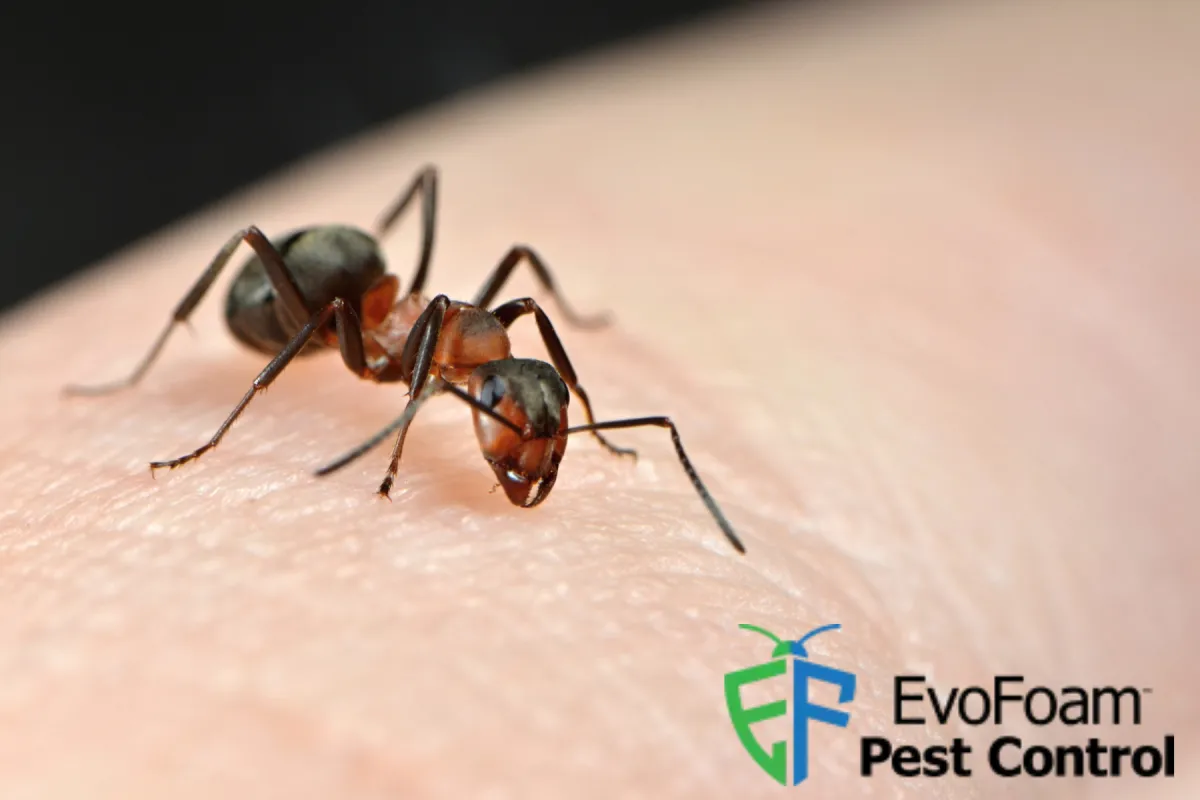
Foam-based ant control reaches hidden colonies behind walls and underground by expanding up to 30 times its liquid volume to fill void spaces, cracks, and subterranean galleries that traditional sprays cannot access. The expanding foam coats ants with non-repellent active ingredients, allowing foraging worker ants to transfer the treatment deep inside the nest through grooming and food sharing to achieve complete colony collapse.
When ants invade your living spaces, what you see marching across the kitchen counter is only a tiny fraction of the actual problem. Thousands of worker ants, along with their reproductive queens and egg chambers, stay safely hidden inside wall voids, behind electrical outlets, under concrete slab foundations, and deep underground.
Many homeowners try to solve ant infestations using off-the-shelf liquid sprays or perimeter dusts, but these traditional methods rarely reach the main nest. Standard liquids tend to run off or pool at the bottom of empty spaces, leaving the majority of internal framing and subterranean galleries untouched.
Foam-based pest control technology changes the game by expanding rapidly to fill every nook, cranny, and air gap inside structural voids. By turning liquid treatments into an expanding micro-bubble matrix, foam technology penetrates hard-to-reach areas, coats hidden ants, and delivers long-lasting protection without wasting resources.
Here is a clear look at how expanding foam reaches secret ant colonies, why traditional surface methods fail, and how pest control in Leander, TX uses modern foam applications to protect your home from deep-rooted pest infestations.
Foam-Based Ant Control vs. Liquid Sprays & Baits: Reach & Coverage Comparison
Comparing expanding foam technology to traditional liquid applications highlights major differences in void coverage, depth of penetration, and overall treatment safety.
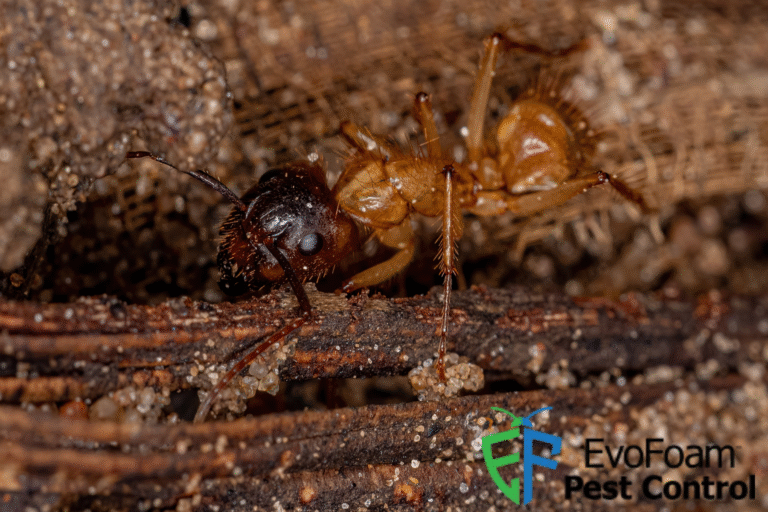
During a recent pest evaluation for a home in Leander, our team inspected a kitchen wall where carpenter ants were repeatedly trailing out from behind baseboards. The homeowner had tried using liquid sprays for weeks, but because the liquid simply pooled at the bottom of the wall cavity, the ants continued to flourish inside the upper framing voids.
Here is how expanding foam compares to traditional methods for deep ant control:
| Performance Factor | Foam-Based Ant Control | Traditional Liquid Sprays | Granular & Gel Baits |
| Void & Cavity Expansion | Expands 10x–30x to fill entire wall voids and pipe chasms | Pools at bottom of voids; cannot reach upper cavity spaces | Limited to surface placement along worker foraging trails |
| Subterranean Gallery Reach | Pushes deep into underground nesting chambers under pressure | Absorbed quickly by surface soil; limited depth penetration | Relies entirely on worker ants carrying matrix underground |
| Transfer Effect Efficiency | High; coats entire ant body in non-repellent formula | Low-to-moderate; repellents often scatter or split colonies | High; slow-acting ingestion and grooming transfer |
| Risk of Surface Runoff | Zero; clings to vertical studs, pipes, and dry soil walls | High risk of dripping, pooling, or washing away in rain | Minimal; but vulnerable to moisture and outdoor elements |
| Residual Longevity in Voids | High; foam collapses into a uniform, long-lasting film | Medium; dries quickly and loses surface contact depth | Low; bait matrices degrade or dry out over short periods |
The 5-Step Foam-Based Ant Extermination Process
Reaching deep-seated ant colonies requires a systematic, professional approach. Skipping structural inspection or application steps can leave hidden satellite nests active inside your home.
1. Thermal Imaging & Wall Void Inspection:
Licensed technicians inspect wall voids, plumbing penetrations, and slab joints for hidden ant activity. Using thermal imaging tools and moisture meters, they map out internal galleries without unnecessary wall removal.
2. Precision Injection Hole Drilling:
Technicians drill tiny, discreet access holes near baseboards, behind outlet plates, or along expansion joints. These small entry points allow application equipment to inject foam directly into targeted void spaces.
3. Expanding Foam Application & Void Saturation:
Technicians inject non-repellent expanding foam under controlled pressure. The foam expands rapidly, coating internal studs, insulation gaps, and soil cracks where ants nest and travel.
4. Colony Transfer & Grooming Cascade:
Foraging ants walk through the treated foam without detecting the active formula. As they return to underground queen chambers, they pass micro-doses to nest mates through natural social grooming.
5. Access Hole Sealing & Surface Cleanup:
Technicians seal all small injection holes with matching wall filler or silicone sealant. The collapsing foam leaves behind a microscopic, long-lasting protective film that prevents future pest entry.
Applying Our EvoFoam Precision Matrix to Solve This
At EvoFoam Pest Control, we believe protecting your home should be effective, sustainable, and completely dependable. With years of industry experience, our team brings advanced solutions to Central Texas homeowners who care about safety and environmental responsibility. We specialize in foam-based pest control technology to solve tough pest problems that standard liquid treatments miss.
Here is how our proprietary EvoFoam Precision Matrix eliminates hidden ant infestations:
- Enhanced Penetration and Accessibility: Standard liquid treatments struggle to reach inside hollow wall studs or beneath concrete slabs. Our advanced foam-based techniques provide enhanced penetration and accessibility, expanding up to 30 times its volume to creep through tight gaps, vertical studs, and subterranean soil cracks to coat hidden colonies directly.
- Eco-Friendly Innovation That Reduces Water Waste: Traditional liquid treatments require gallons of water to saturate soil and foundation gaps. Our expanding foam technology uses air and micro-bubble matrices to maximize coverage while allowing us to reduce water waste without losing treatment power.
- Innovative Advantages over Traditional Methods: Our innovative advantages mean that unlike old-fashioned liquid sprays that puddle on floors, expanding foam clings to vertical wood framing, pipe chases, and soil walls. This ensures the active formula stays exactly where pests nest instead of running off into unwanted areas.
- Personalized Treatment Plan for Every Home: Every property has a unique layout. We design a personalized treatment plan for your space, targeting active entry points and high-risk void spaces to ensure thorough, long-lasting protection.
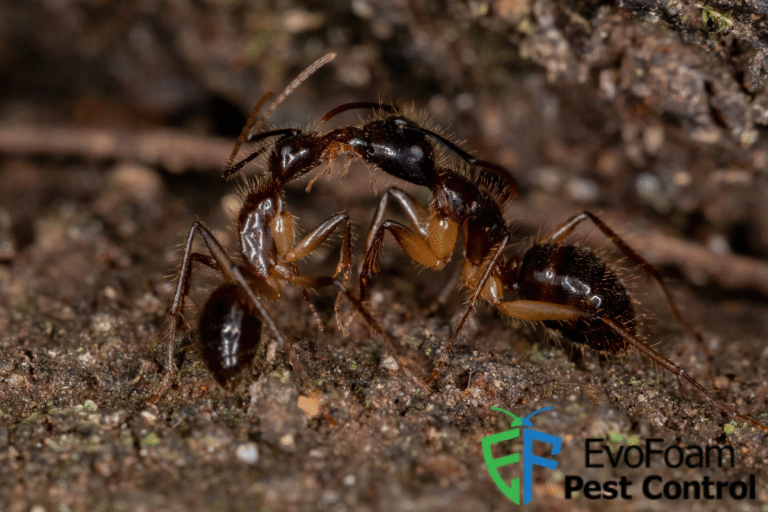
- Local Expertise You Can Trust: While performing a home evaluation for a family, our Leander pest control technician discovered a massive carpenter ant gallery hidden behind a master bathroom wall. Using our precision foam application, we filled the entire void space without tearing down drywall, eliminating the nest and protecting the home’s structure.
Debunking the Myth: “Surface Spraying Eliminates Wall-Nesting Ant Colonies”
A common myth among homeowners is that applying liquid pest control along baseboards and outdoor foundations will eliminate a wall-nesting ant colony.
Here is why surface liquid sprays fail to solve deep ant problems:
Over-the-counter sprays contain strong repellent chemicals that only kill the foraging worker ants walking across your floor. When the rest of the colony detects the repellent chemical on baseboards, the ants panic. This stress triggers a defense mechanism called “budding,” where the main colony splits into multiple smaller satellite nests scattered throughout your walls and attic.
Furthermore, gravity forces liquid sprays straight to the bottom of hollow wall framing, leaving 90% of internal studs and upper nesting cavities dry. Liquid treatments also evaporate quickly on porous drywall or soil, reducing the physical contact area needed to spread active ingredients to underground queens.
Technical Specifications & Equipment Glossary
Understanding key pest management terms helps you choose the best treatment approach for your home:
Expansion Ratio
The volumetric increase of liquid solution as it converts into micro-bubble foam (typically 10:1 up to 30:1), allowing small amounts of solution to fill large structural voids.
Non-Repellent Active Ingredient
Advanced, eco-friendly treatment chemistry that ants cannot detect, allowing worker ants to walk through treated areas freely and carry micro-doses back to their queens.
Trophallaxis (Social Sharing)
The natural biological process where ants share food and grooming fluids with colony members, serving as the main transport pathway for non-repellent treatments deep inside the nest.
Low-Pressure Foam Generator
Specialized application equipment that blends air, liquid solution, and eco-friendly foaming agents under controlled pressure to produce dry, long-lasting micro-bubbles.

People Also Ask (FAQ)
Will foam-based ant control damage my drywall, wallpaper, or electrical outlets?
No. Professional pest control operators use low-moisture “dry” foams designed specifically for internal building cavities. The foam expands safely away from electrical junctions and dissipates cleanly without staining, warping drywall, or leaving sticky residue behind.
How long does it take for expanding foam to eliminate an entire ant colony?
While direct contact with foam eliminates worker ants within hours, complete colony eradication typically takes 3 to 7 days. This allows foraging workers time to pass non-repellent micro-doses to underground queens and larvae through natural social contact.
Why is foam better than liquid sprays for subterranean ants under concrete slabs?
Liquid sprays run off or absorb unevenly into topsoil, missing deep soil cracks beneath concrete floors. Expanding foam pushes into underground soil gaps under pressure, filling empty spaces and ensuring direct contact with deep nesting chambers.
Protect Your Home with Sustainable Foam Technology
Relying on surface liquid sprays, perimeter dusting, or store-bought ant traps leaves hidden wall voids and underground nests untouched. Lasting relief requires advanced foam technology that expands into hidden spaces, coats nesting galleries, and eliminates colonies at their source.
At EvoFoam Pest Control, we are proud to offer dependable, eco-conscious solutions that prioritize safety and sustainability. Our advanced, non-toxic methods target hard-to-reach areas, giving Central Texas homeowners complete confidence and peace of mind.
Whether you need targeted pest control in Leander or a full home evaluation, our friendly, professional team is here to help. If you want a reliable solution that protects your family, pets, and the environment, we deliver proven results backed by years of expertise.
Ready to eliminate hidden pests with safe, effective foam technology? Contact us today to schedule your consultation and see how our eco-friendly foam treatments can protect your home!