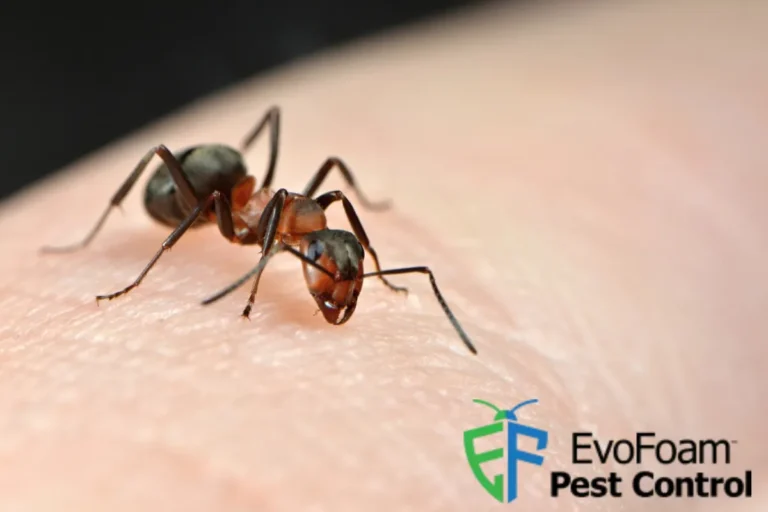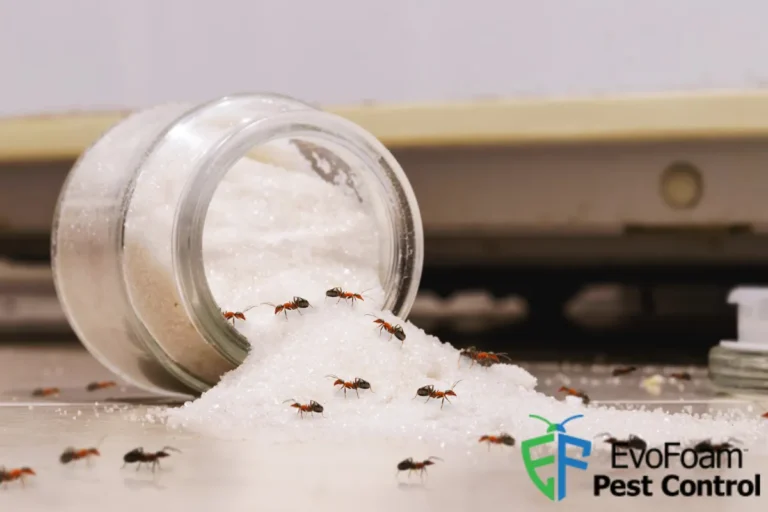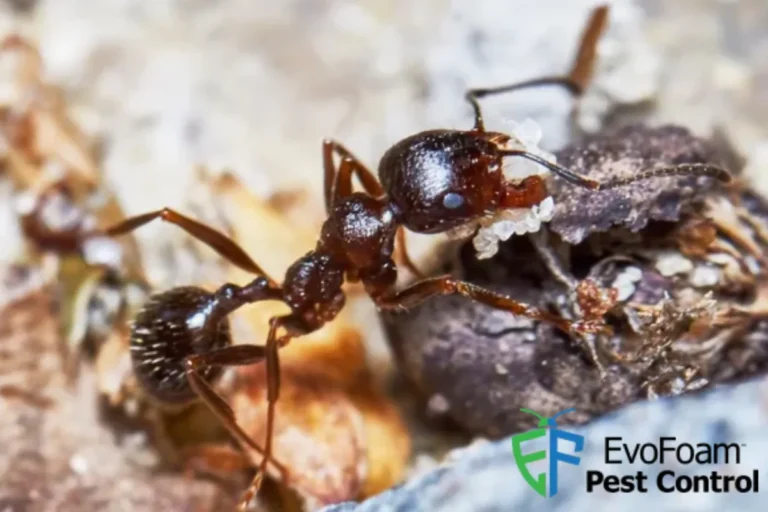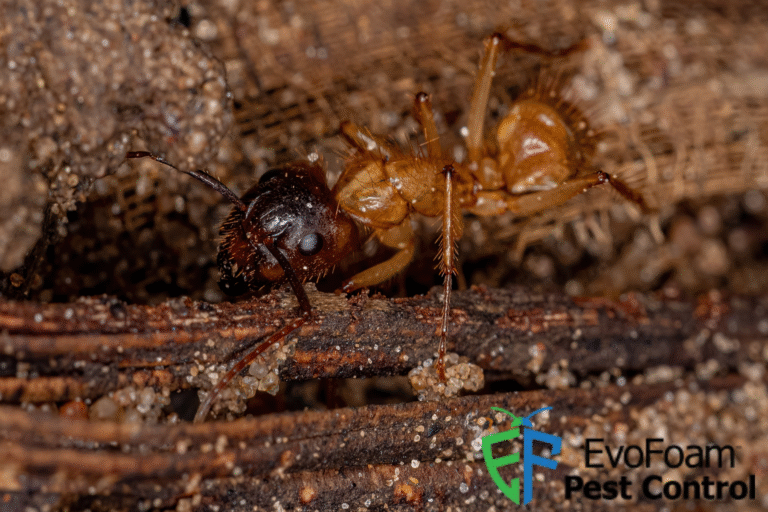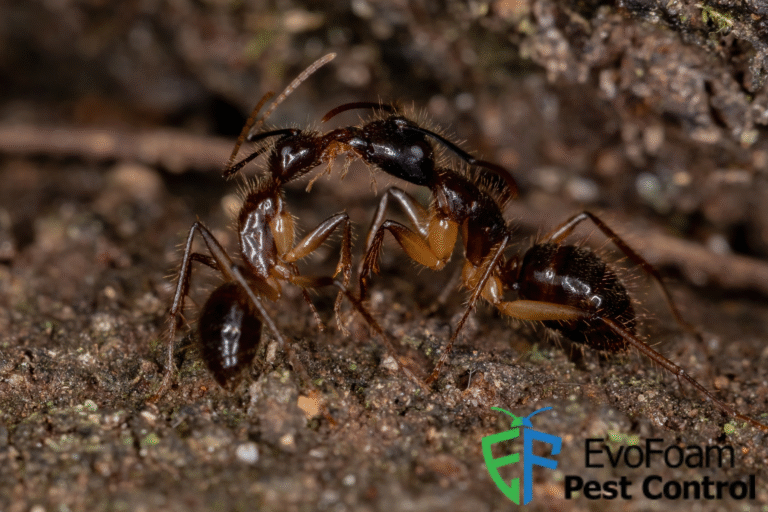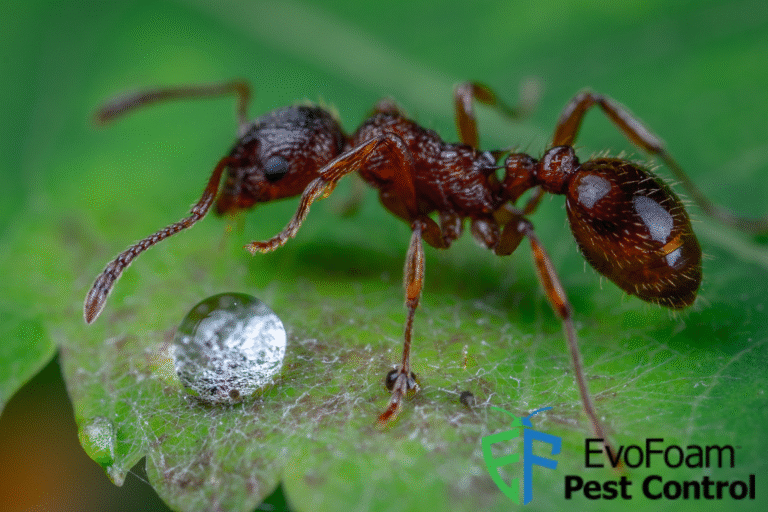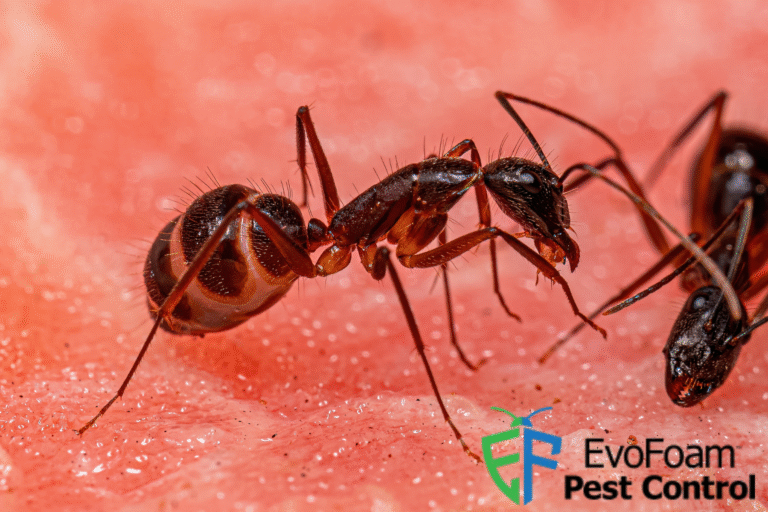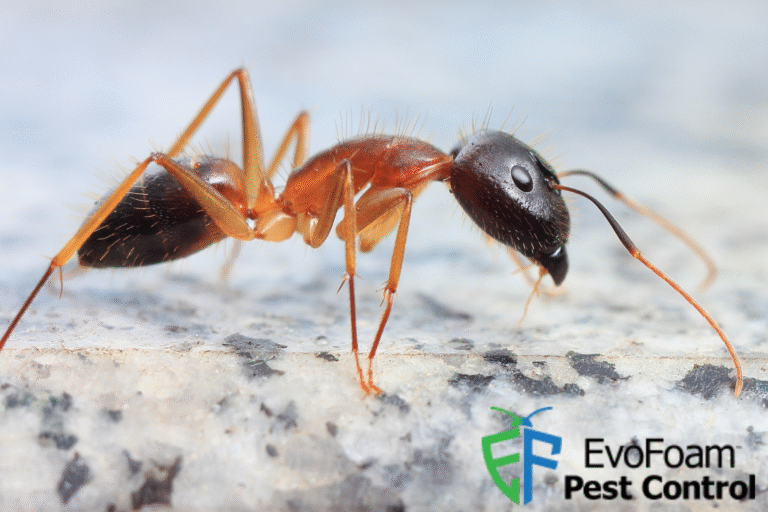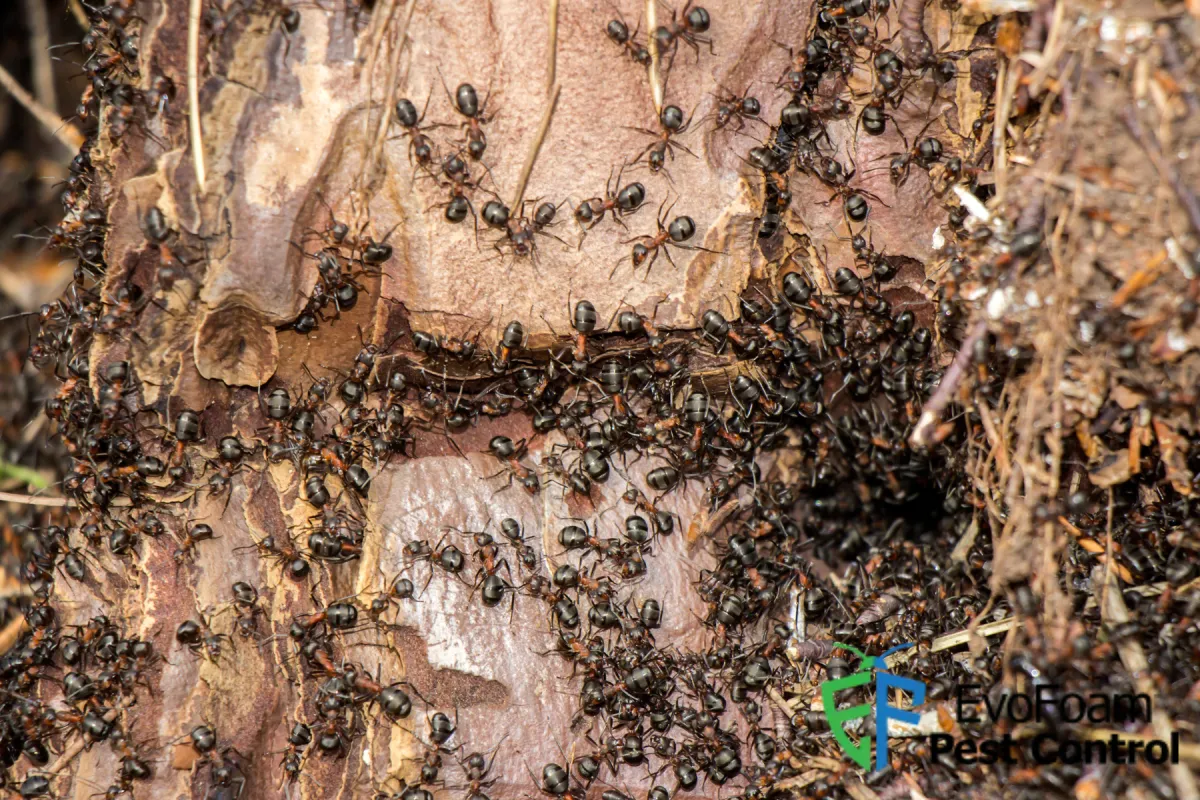
Foam-based ant control reaches hidden colonies by delivering targeted treatment into enclosed spaces where ants may nest or travel. Technicians inspect ant trails, identify likely nesting areas, and apply foam where appropriate to reach cracks, crevices, and other spaces that ordinary surface treatments may not cover.
Why Are Hidden Ant Colonies Difficult to Eliminate?
Seeing ants on a kitchen counter or along a baseboard does not always mean their nest is nearby. Worker ants leave the colony to search for food and water, so their trails may pass through several rooms before reaching the nesting area.
Some ants build nests behind walls, under floors, inside cabinets, and around plumbing gaps. These spaces make it difficult to reach the colony with basic surface treatments. Even after visible ants are removed, others may continue emerging from hidden areas.
Ants Build Nests in Hard-to-Reach Areas
Ants look for places that provide shelter, moisture, and access to food. Depending on the species, they may establish nests in:
- Wall voids and spaces behind drywall
- Gaps beneath flooring and baseboards
- Spaces behind kitchen cabinets
- Areas around pipes and plumbing lines
- Crawl spaces and other enclosed areas
- Cracks in foundations and exterior walls
These locations can protect a colony from everyday activity inside a home or business. They can also make it harder to find the source of recurring ant problems.
Visible Ant Trails Do Not Always Reveal the Nest
Worker ants follow scent trails to food and water sources. These trails can help technicians understand where ants are traveling, but they do not always lead directly to the nest.
For example, ants moving along a kitchen counter may be entering through a small opening behind a cabinet. The colony could be located deeper inside the wall.
This is why treating only the ants you see may not resolve the infestation. Effective ant control focuses on finding the source of the activity and selecting a treatment that can reach the affected area.
Some Ant Colonies Have Multiple Nesting Areas
Certain ant species can establish more than one nesting location. These connected or satellite nests may allow a colony to spread across different parts of a property.
If only one nesting area is treated, ants may continue appearing from another location. Identifying the ant species and understanding its nesting habits help professionals decide how to approach the infestation.
What Are the Signs of a Hidden Ant Colony?
You may not see the nest itself, but several signs can point to hidden ant activity.
- Recurring ant trails: Ants repeatedly follow the same route along walls, floors, counters, or baseboards.
- Ants emerging from small gaps: Activity around cracks, outlets, cabinets, or trim may indicate a nearby nesting area.
- Ants appearing in multiple rooms: Repeated sightings in different areas may suggest connected travel routes or multiple nesting locations.
- Activity despite regular cleaning: Ants may continue appearing even after accessible food sources have been removed.
- Increased activity around moisture: Leaks, damp areas, and plumbing spaces can attract certain ants and provide suitable nesting conditions.
These signs can help narrow down where exterminators in Taylor, TX should inspect, but they do not confirm the exact nest location. A professional assessment can help determine what is causing the activity.
How Do Professionals Locate Hidden Ant Colonies Before Applying Foam?
Before choosing a treatment, technicians need to understand where ants are traveling and where the colony may be located. A careful inspection helps identify the source and avoid unnecessary applications.
A typical inspection may include these steps:
- Identify the ant species. Technicians examine the ants’ appearance and behavior to help determine their nesting habits and treatment needs.
- Follow visible ant trails. They observe where ants travel and where they disappear into walls, cabinets, or other structures.
- Inspect possible nesting areas. They check cracks, wall voids, baseboards, plumbing gaps, and other concealed spaces.
- Look for moisture and food sources. They identify conditions that may attract ants or support their activity.
- Determine suitable treatment access. They assess whether foam can reach the suspected nesting area or whether another method would be more appropriate.
Visible Ant Activity vs. Hidden Colony Locations
| Visible Ant Activity | Hidden Colony Location |
| Ants moving along counters or floors | Nesting area inside an enclosed space |
| Trails near food sources | Colony may be located elsewhere |
| Ants entering small gaps | Opening may lead toward a hidden nest |
| Activity that is easy to observe | May require closer inspection |
Following ant trails gives technicians useful information, but the goal is to understand where the activity begins. This helps them choose a treatment based on the infestation rather than simply addressing the areas where ants appear.
How Does Foam-Based Ant Control Work?
Foam treatment is designed to carry product into certain enclosed or hard-to-reach spaces. When ants travel or nest inside suitable wall voids and other cavities, this application method may help technicians reach areas that are difficult to treat from the surface.
Foam Helps Reach Enclosed Spaces
Unlike a treatment applied only to an exposed surface, foam can expand or spread into accessible spaces within a cavity. This helps carry product into certain areas where ants may travel or nest.
However, foam cannot reach every space inside a building. Its effectiveness depends on the cavity’s layout, the available access point, and the product’s intended use.
Foam Provides Targeted Application
Technicians first inspect the property to identify likely nesting and travel areas. Once they determine that foam is suitable, they can apply treatment to the affected spaces.
This targeted approach matters because treating an unrelated surface may do little to address a hidden colony. The goal is to reach the area connected to the infestation.
Treatment Selection Depends on the Ant Infestation
Foam is not the right choice for every ant problem. The ant species, nest location, colony size, and available access all affect which method is suitable.
In some situations, another treatment may be more appropriate. A professional assessment helps determine the best approach for the conditions found at the property.
Foam-Based Ant Treatment vs. Other Ant Control Methods
Different treatment methods serve different purposes. The best option depends on where ants are nesting, how they travel, and which products are appropriate for the infestation.
| Treatment Approach | How It Works | Potential Application |
| Foam treatment | Carries product into certain enclosed or hard-to-reach spaces | Suitable for wall voids and concealed areas |
| Bait treatment | Worker ants carry bait back toward the colony | Certain ant species and feeding patterns |
| Dust treatment | Uses a targeted dust application in appropriate spaces | Selected dry voids and accessible cavities |
| Liquid treatment | Applies treatment to a specific surface or area | Suitable accessible locations |
When Is Foam Treatment a Suitable Option?
Foam may be considered when:
- Ants are entering or traveling through accessible wall voids.
- The suspected nesting area is difficult to reach with surface applications.
- The structure allows the product to reach the target area.
- The product directions and application conditions support its use.
When Might Another Treatment Be Needed?
Another method may be more appropriate when ants are actively feeding on suitable bait, the nest is outdoors, or the suspected nesting area cannot be reached with foam. Moisture, wall construction, and other property conditions can also affect treatment selection.
A professional should assess these factors before deciding which application method to use.
Applying Our Family-Owned, Eco-Friendly Foam-Based Approach to Solve This
At EvoFoam Pest Control, we combine practical experience with advanced foam-based techniques to address ant infestations in difficult-to-reach areas. As a family-owned team with over eight years of practical know-how, we focus on identifying the source of the problem and selecting a treatment suited to the property.
Advanced Foam Techniques for Better Accessibility
Our foam-based approach is designed to reach areas that may be difficult to access through ordinary surface applications. Foam can move into suitable cracks and crevices, helping carry product deeper into spaces where ants may travel or nest.
This enhanced penetration and accessibility can be useful when colonies are hidden behind walls, inside cavities, or in other enclosed areas. Our technicians inspect the affected space first to determine whether foam is appropriate.
Targeted Application to Address the Source
We take a systematic approach to ant problems. Our technicians inspect the property to identify the ant species, locate entry points, and assess the extent of the infestation.
Based on those findings, we create a treatment plan for the affected areas. This allows us to focus on the source of the activity instead of repeatedly treating the same visible ant trails.
Reducing Water Usage With Foam-Based Treatments
Our foam-based approach can help reduce water usage compared with applications that require more liquid. Using less water supports our goal of conserving resources while still addressing suitable pest problems.
We also focus on eco-friendly treatment options and responsible application. A Taylor exterminator from EvoFoam Pest Control can help ensure the product and method are appropriate for the target area while explaining any precautions needed around the home or business.
Customized Service for Different Ant Problems
EvoFoam Pest Control treats different types of ants, including fire ants, carpenter ants, and odorous house ants. Each species can have different nesting habits, so identifying the ant is an important part of choosing a treatment.
Our goal is to provide a plan that addresses the infestation and its surrounding areas. We also offer a satisfaction guarantee and free inspections, giving customers a clear starting point when ants become a recurring problem.
Myth: Killing the Ants You See Is Enough to Eliminate the Colony
Removing visible ants may make a room look cleaner, but it does not necessarily resolve the infestation. Worker ants leave the nest to search for food and water, while the rest of the colony may remain hidden inside a wall, beneath a floor, or in another enclosed space.
Why Visible Ants Are Only Part of the Problem
Killing ants on a counter or floor may reduce the number you see, but it may not affect the nest. If the colony remains active, more worker ants can continue using the same trails and entering the property.
Repeatedly treating the same visible areas may not solve the problem if the source remains untouched.
What Should Happen Instead?
A better approach focuses on the source of the activity:
- Identify the ant species and signs of infestation.
- Trace visible trails toward possible nesting areas.
- Inspect concealed spaces and potential entry points.
- Select a suitable treatment based on the colony and property conditions.
- Monitor activity and address conditions that may attract ants.
The goal is to address the infestation at its source rather than focus only on the ants that happen to be visible.
DIY Ant Control vs. Professional Foam-Based Treatment
DIY products may help with some minor ant problems, but hidden colonies can be harder to manage without knowing where they are located.
| Consideration | DIY Approach | Professional Treatment |
| Finding the nest | May focus on visible trails | Uses inspection and activity patterns |
| Reaching enclosed spaces | May lack suitable access or application tools | Assesses access and treatment options |
| Selecting treatment | May rely on general-purpose products | Considers ant species and nesting location |
| Addressing recurring activity | May repeatedly treat visible areas | Looks for the source and contributing conditions |
| Follow-up | May be overlooked | Can include monitoring and further treatment when needed |
When Should You Call a Professional?
Consider professional help when:
- Ants keep returning after cleaning and DIY efforts.
- Ants repeatedly emerge from wall gaps or enclosed spaces.
- You see trails in several rooms.
- Activity continues after removing accessible food sources.
- You suspect a nest inside a wall, cabinet, or another hard-to-reach area.
If you need pest control in Taylor, TX, a professional inspection can help determine whether ants are nesting inside the structure or entering from another location.
People Also Ask
Does foam-based ant control eliminate hidden colonies?
Foam treatment can help reach certain concealed nesting areas, but results depend on the ant species, nest location, and application conditions. A professional inspection helps determine whether foam is suitable.
How does foam treatment reach ants inside walls?
Foam can carry product into certain accessible wall voids and enclosed spaces where ants may travel or nest. The application must be suitable for the structure and target area.
Is foam treatment better than ant bait?
Not always. Foam and bait work differently. Foam may help reach certain enclosed spaces, while bait can be useful for ant species that carry food back toward the colony. The right option depends on the infestation.
Can ants return after foam treatment?
Yes. Ants may return if other nesting areas remain active or if entry points and conditions attracting them are not addressed. Follow-up and prevention recommendations can help reduce recurring activity.
How do professionals find ant nests inside walls?
Technicians observe ant trails, inspect likely entry points, and assess wall gaps and other concealed areas. These signs help them identify possible nesting locations and suitable treatment access.
Is foam-based ant control suitable for homes and businesses?
It may be suitable for certain infestations in residential and commercial properties. A technician needs to assess the nesting area, structure, and product directions before recommending this method.
Get Professional Help for Hidden Ant Colonies
Hidden ant colonies can be difficult to address because visible trails do not always reveal where the nest is located. Foam treatment can help reach certain enclosed spaces, but the right approach depends on the ant species, nesting area, and property conditions.
EvoFoam Pest Control can inspect your property and recommend a suitable treatment plan. Our family-owned team uses advanced foam-based techniques to reach difficult areas, with a focus on targeted applications, eco-friendly solutions, and reduced water usage where appropriate.
Contact us today to schedule a free inspection and discuss your ant problem. You can also learn more about our ant control services and take the next step toward a more comfortable property. If someone you know is dealing with recurring ant activity, share our eco-conscious solutions with them.