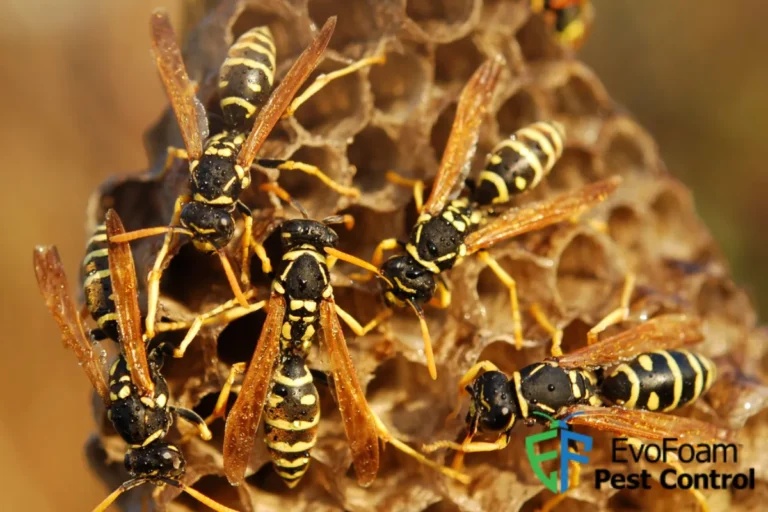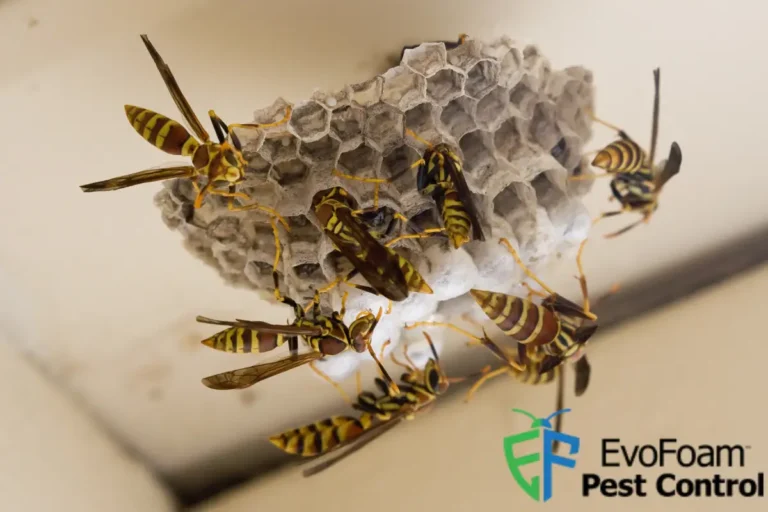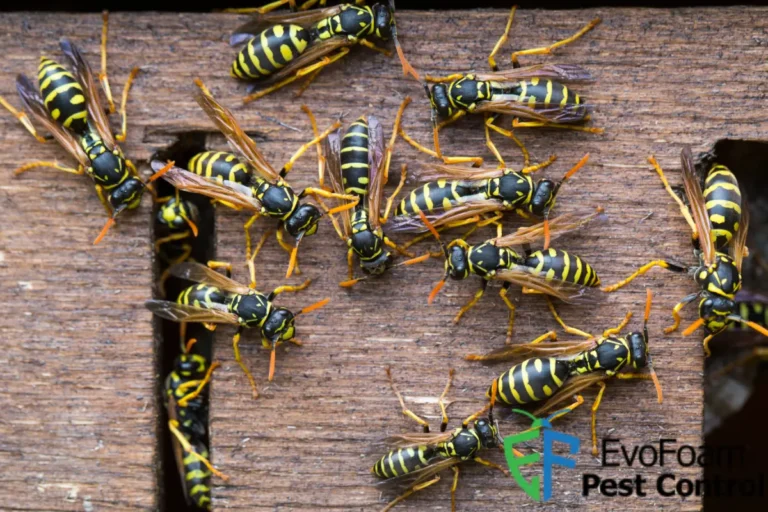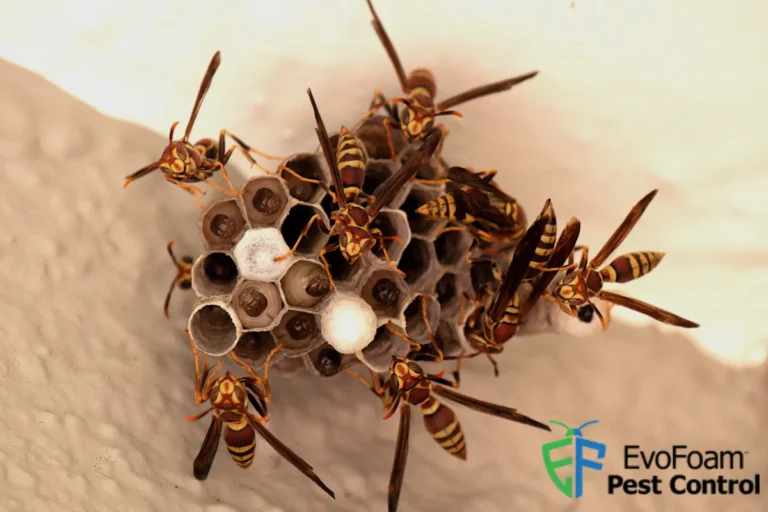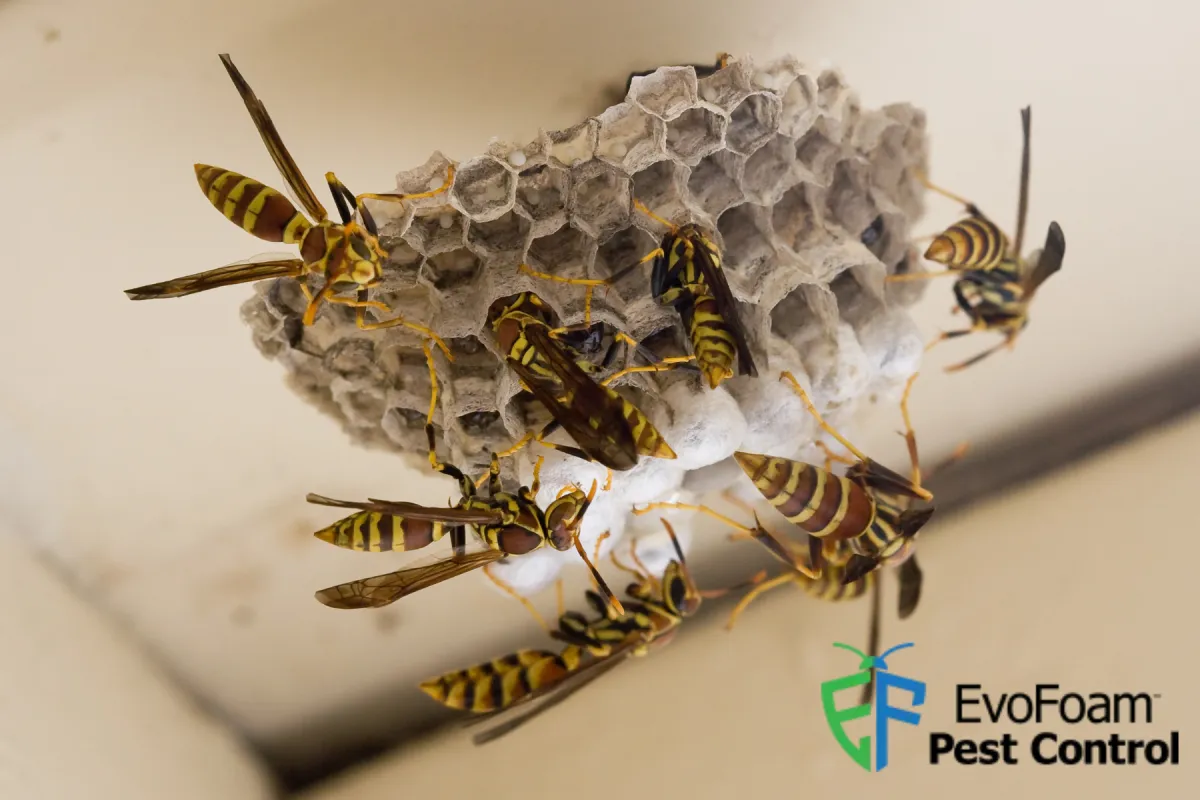
Professional wasp control for nests hidden inside wall voids starts with locating where wasps enter and identifying the likely nesting area. Technicians then assess the wall structure and choose a suitable treatment, such as foam, aerosol, or dust, based on the nest’s location and the size of the infestation. Follow-up may also be needed to check for continued activity.
Why Are Wasp Nests Inside Wall Voids Difficult to Treat?
Wasps can build nests in protected spaces where people rarely look. Wall cavities are particularly challenging because the nest may be hidden behind siding, drywall, or insulation. You might see wasps entering through a small gap, but that opening does not always reveal where the colony is located.
Treating only the visible entrance may not address the nest. Professional wasp control requires technicians to understand how wasps are using the opening and determine whether the nesting area can be reached safely.
Limited Access to the Nest
A wall void is the enclosed space between sections of a wall. It may contain insulation, wiring, pipes, and other building materials. These obstacles can make it difficult to reach a nest without opening part of the wall.
Drilling or removing materials without knowing what is inside can also disturb the colony or damage the structure. A professional inspection helps determine the likely nesting location before treatment begins.
Wasps Can Enter Through Small Openings
Wasps do not need a large hole to get inside a wall. They may use small gaps around siding, soffits, vents, roof edges, window frames, or exterior trim.
If you repeatedly see wasps entering and leaving the same opening, there may be a nest somewhere inside the structure. However, the entry point and the actual nesting area may be in different locations.
Disturbing a Hidden Colony Can Be Risky
Wasps may become defensive when their nest is disturbed. Drilling into a wall, blocking an active opening, or attempting to remove the nest without proper equipment can increase the risk of stings.
This can be especially concerning for people with allergies to wasp stings. Avoid disturbing the suspected nesting area and have it assessed by a Leander pest control professional.
What Are the Signs of a Wasp Nest Hidden Inside a Wall?
You may not see the nest itself, but certain signs can help you recognize a possible infestation.
- Wasps repeatedly entering the same opening: Frequent activity around a gap in the siding, soffit, or exterior wall may point to a hidden nest.
- Buzzing sounds inside a wall: Repeated buzzing from one area may indicate insect activity inside the cavity, although other sources are possible.
- Wasps appearing indoors: Wasps occasionally found inside a room may be entering through gaps connected to an enclosed wall space.
- Increased activity around one section of the building: Several wasps gathering near the same wall, vent, or roofline can be a sign of nearby nesting activity.
- Recurring wasp problems in the same area: If wasps keep returning to one part of the property, the original nesting source may not have been fully addressed.
These signs can help narrow down where to inspect, but they do not confirm the exact nest location. A technician needs to assess the property to determine what is causing the activity.
How Do Pest Control Professionals Locate Wasps Inside Wall Voids?
Finding a hidden nest takes more than looking at the opening where wasps are flying. Technicians inspect the surrounding structure and observe how the insects move around the property.
A typical inspection includes these steps:
- Inspect exterior walls and surfaces. Technicians check siding, trim, soffits, vents, roof edges, and other areas where gaps may form.
- Observe wasp flight patterns. Repeated entry and exit activity can help identify the opening wasps are using.
- Check possible access points. The technician assesses whether an exterior gap may connect to an enclosed wall space.
- Look for signs of indoor activity. Wasps appearing inside rooms or unusual sounds coming from a wall may provide additional clues.
- Assess the likely nesting area. The technician considers the wall construction, level of activity, and available access before choosing a treatment method.
Visible Entry Points vs. Hidden Nesting Areas
It is important to understand that the opening wasps use is not necessarily where the colony is located.
| Visible Entry Point | Hidden Nesting Area |
| The opening wasps use to enter or leave | The enclosed space where the colony may be established |
| Often visible from outside | May be concealed behind building materials |
| Helps technicians trace wasp activity | Requires further assessment to locate |
| Treating the opening alone may not reach the colony | Needs an appropriate treatment approach |
For example, a homeowner in Leander might notice wasps entering a narrow gap beneath exterior siding. That opening gives technicians a place to start, but further inspection is needed to understand where the nest may be inside the wall.
How Does Professional Wasp Control Treat Nests Inside Wall Voids?
Once technicians have assessed the activity and likely nesting location, they can determine how to address the infestation. The process depends on the wall structure, the nest’s accessibility, and the treatment options suitable for the area.
Step 1: Assess the Wall Structure and Infestation
The first step is to understand where the wasps are active and how they may be entering the building. Technicians consider the location of the opening, the level of activity, and whether the nesting space can be reached without unnecessary damage.
They also check for nearby gaps that could allow wasps to enter other parts of the structure.
Step 2: Select a Suitable Treatment Method
There is no single treatment method for every hidden nest. Depending on the conditions, a professional may consider foam, aerosol, or dust applications.
The choice depends on the nest’s location, the depth of the wall cavity, available access, and the product’s approved use.
Step 3: Apply Treatment to the Appropriate Area
The goal is to address the nesting area rather than simply treat the opening where wasps are seen. Technicians use the selected application method according to product directions and the conditions at the property.
A targeted approach can help reach areas that are difficult to access through ordinary surface treatment.
Step 4: Monitor Activity and Recommend Follow-Up
After treatment, technicians may recommend monitoring the area for continued wasp activity. If wasps remain active, further assessment or treatment may be needed.
Once the infestation has been addressed, the technician can also recommend repairing suitable gaps and openings to help reduce the chance of future nesting.
Which Treatment Methods Can Be Used for Wasps Inside Wall Cavities?
The right treatment depends on the location and condition of the nest. Some methods are designed to reach enclosed spaces, while others may be better suited to specific accessible areas.
| Treatment Method | How It Works | When It May Be Considered |
| Foam treatment | Helps carry product into certain enclosed or hard-to-reach spaces | Suitable for wall voids and concealed nesting areas |
| Dust treatment | Uses a targeted dust application in appropriate spaces | Certain accessible cavities or entry areas |
| Aerosol treatment | Delivers a product into a specific accessible area | Situations where the product and application conditions allow it |
Why Treatment Selection Depends on the Wall Void
Before selecting a method, professionals consider several details:
- Nest accessibility: How easily the suspected nesting area can be reached.
- Wall construction: Whether insulation or other materials may affect the application.
- Entry point location: Where wasps enter and how that opening connects to the wall.
- Level of activity: How frequently wasps enter and leave the area.
- Product directions: Whether the treatment is approved for the intended location and application.
Understanding these details helps technicians choose a suitable method instead of using the same approach for every infestation.
Important Terms to Know
- Wall void: An enclosed space between sections of a wall that may contain insulation, wiring, or pipes.
- Targeted application: Applying a treatment to a specific area where pest activity has been identified.
- Foam treatment: A treatment method that can help carry product into certain enclosed or hard-to-reach spaces.
- Entry point: An opening that wasps use to move between the outside of a building and a nesting area.
Applying Our Family-Owned, Foam-Based Wasp Control Approach to Solve This
At EvoFoam Pest Control, we combine practical experience with treatment methods designed to reach difficult areas. As a family-owned company with over eight years of hands-on experience, we understand that every infestation has its own challenges. Our team offers same-day service and assesses each situation before deciding which application method is appropriate.
Using Foam Treatments to Reach Difficult Areas
Foam treatments are an important part of our approach. The foam can help carry product deeper into certain enclosed spaces, including areas that may be difficult to reach through other applications.
This can be useful when a nest is hidden inside a wall void. It can also help limit the spread that may happen with liquid applications in windy conditions. Our approach focuses on using less water and fewer insecticides where the treatment method and conditions allow.
Choosing the Right Method for Each Infestation
Although we use foam treatments where appropriate, foam is not the right choice for every nest. The method depends on the location of the nest, the size of the infestation, and the available access.
Our technicians might also use aerosol or dust applications when needed. This flexibility allows us to select a treatment based on the actual problem rather than relying on one method for every property.
Combining Experience With Household Considerations
Our team understands that homeowners and business owners want their pest problems addressed without unnecessary disruption. We consider the property’s layout and explain any household precautions that may be needed after treatment.
We aim to provide effective, eco-conscious service while keeping the needs of the people who use the property in mind.
Backing Our Service With a Satisfaction Guarantee
We want customers to feel confident in the service they receive. EvoFoam Pest Control offers a 100% satisfaction guarantee. If you do not see results after 30 days, our team will return to treat the affected area and continue treating until the pests are gone. If you are still unhappy, we will refund your initial payment under the company’s guarantee terms.
Myth: Sealing the Opening Is Enough to Eliminate a Wasp Nest Inside a Wall
Sealing a gap where wasps enter may seem like a simple solution, but it does not automatically remove the colony. If wasps are still active inside the wall, closing their access point may leave the nest undisturbed.
Why Sealing an Active Entry Point Can Be a Problem
Wasps may remain inside the cavity after an opening is blocked. They may also try to find another way out, which can lead to activity in a different part of the building.
This is why homeowners should avoid sealing an opening while a colony may still be active. Blocking the visible gap without addressing the nest does not solve the source of the problem.
What Should Happen Before the Opening Is Sealed?
Follow these steps:
- Have the suspected nest and entry point professionally assessed.
- Determine the appropriate treatment for the nesting area.
- Follow the technician’s recommendations and check for continued activity.
- Repair or seal suitable openings once the active infestation has been addressed.
Sealing gaps is an important prevention step, but it should not replace treatment for an active nest.
DIY Wasp Removal vs. Professional Treatment for Wall Voids
Trying to handle a hidden nest without knowing its location can create additional risks. Here is how a DIY approach compares with professional service.
| Consideration | DIY Approach | Professional Wasp Control |
| Finding the nest | May rely on visible activity | Uses inspection and flight-pattern observations |
| Accessing the wall | May involve drilling or opening surfaces without knowing what is inside | Assesses the structure and suitable access options |
| Selecting treatment | May use a general-purpose product | Chooses a method based on the infestation |
| Managing wasp activity | May disturb the colony | Uses professional equipment and application practices |
| Follow-up | May be overlooked | Can include monitoring and further treatment when needed |
When Should You Call a Professional?
Contact a pest control professional if:
- Wasps repeatedly enter and leave the same wall opening.
- You hear persistent buzzing from inside a wall.
- Wasps are appearing inside your home or business.
- Activity continues after attempts to address the visible opening.
- The suspected nest is near a frequently used entrance or living area.
- You cannot identify the nest without disturbing the structure.
If you need pest control in Leander, a professional inspection can help determine whether the activity comes from a wall void or another nesting location. A technician can then recommend a treatment based on the conditions found.
People Also Ask
Can wasps build a nest inside a wall?
Yes. Some wasps can enter through small exterior gaps and establish nests in suitable wall cavities or other enclosed spaces. You may notice repeated activity around one opening even when the nest itself is not visible.
How do pest control professionals find a wasp nest inside a wall?
Technicians inspect exterior openings, observe wasp flight patterns, and look for signs of activity around the structure. These clues help them identify the likely nesting area and determine how it can be treated.
Can foam treatment reach a wasp nest inside a wall?
Foam treatment may help reach certain concealed nesting areas, depending on the wall structure, nest location, and application conditions. A professional must assess the situation to determine whether foam is suitable.
Should I seal a hole where wasps enter a wall?
Do not seal an opening while the colony may still be active. Have the nesting area assessed and treated first. Once the infestation has been addressed, sealing suitable gaps can help reduce the chance of future nesting.
How long does it take to eliminate wasps inside a wall?
The timeframe depends on the colony, nest accessibility, treatment method, and level of activity. A technician can explain what to expect after inspecting the affected area.
Can wasps return to the same wall void?
Yes. If suitable gaps remain, wasps may use the same or nearby areas for future nesting. Repairing openings after the active infestation has been addressed can help lower this risk.
Get Professional Help for Wasps Nesting Inside Your Walls
A wasp nest hidden inside a wall can be difficult to locate and treat without the right approach. Treating only the visible opening may not reach the colony, while disturbing the wall can create unnecessary risks. EvoFoam Pest Control provides professional inspections to identify the likely nesting area and determine which treatment method is suitable.
For homeowners looking for pest control in Leander, TX, our team offers same-day service and foam-based treatment options. Our family-owned team assesses each infestation and may use foam, aerosol, or dust applications depending on the conditions.
Contact us today to schedule an appointment or discuss your wasp problem. You can also learn more about our wasp control services and take the next step toward a more comfortable, pest-free property.