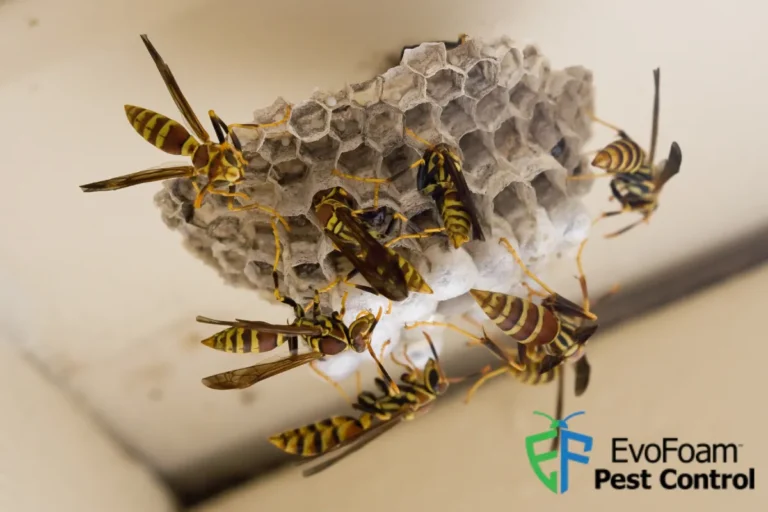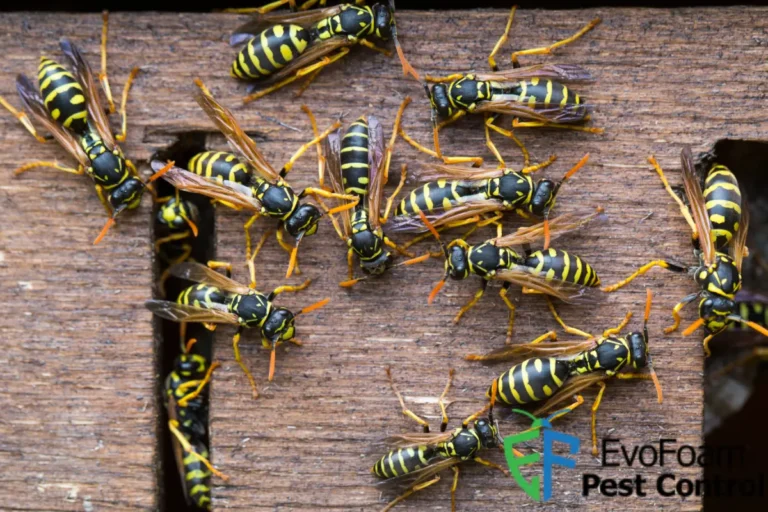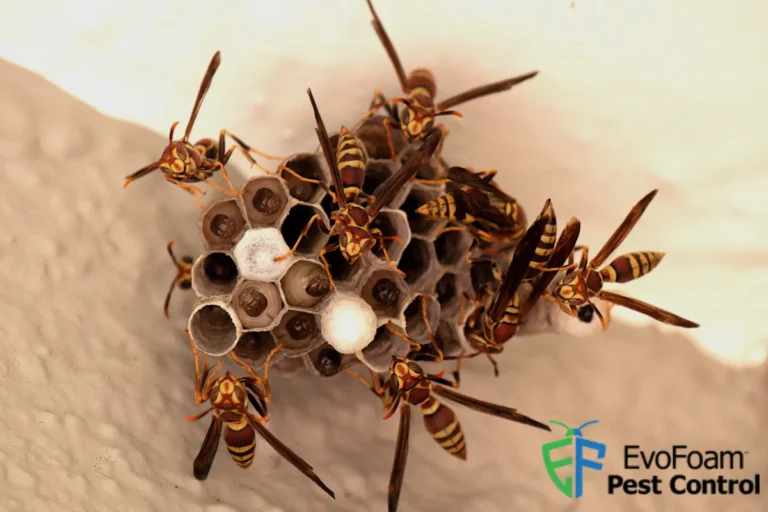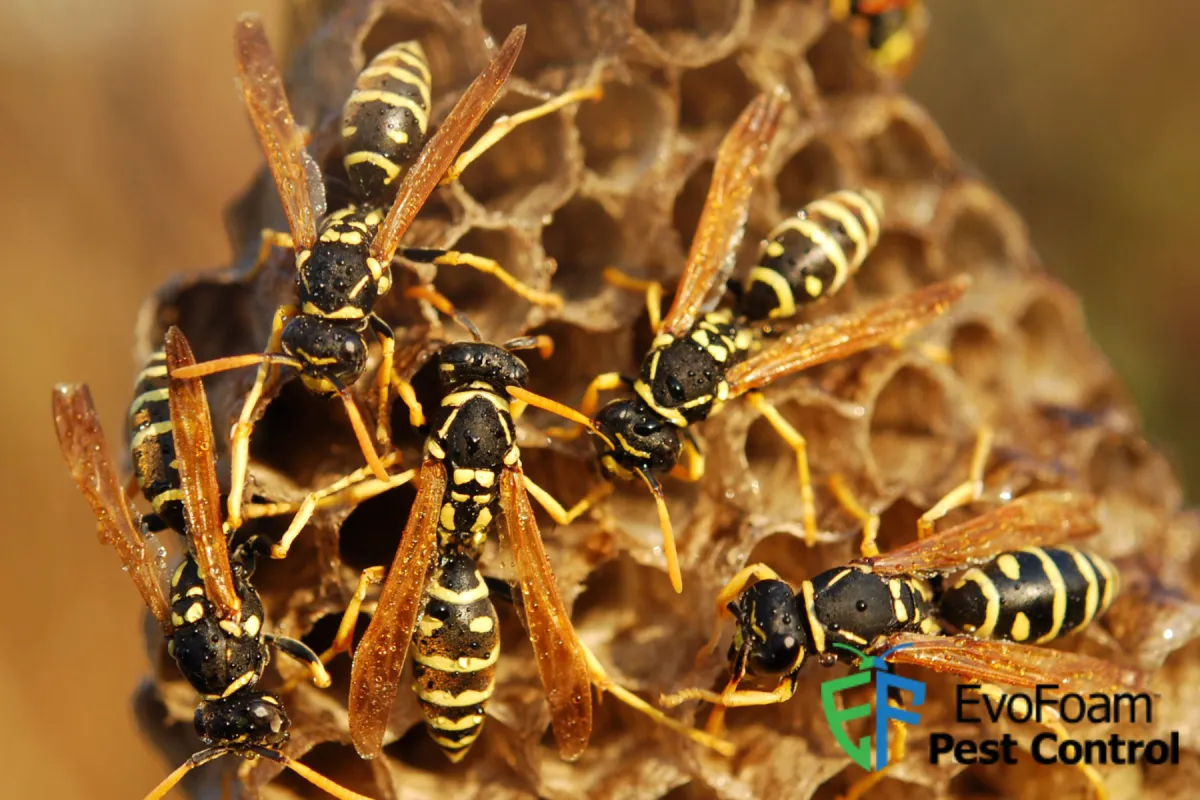
Professional wasp control is necessary when a colony is large, wasps become aggressive, or a nest is close to people, pets, and frequently used areas. Professional help is also recommended when a nest is hidden inside a structure, located high above the ground, or difficult to reach safely.
Why Can Large or Aggressive Wasp Colonies Be Dangerous?
Wasps can become defensive when they sense a threat near their nest. Someone might disturb a colony while gardening, opening a shed, cleaning around roof edges, or using an outdoor seating area without realizing a nest is nearby.
Many wasps can sting more than once. When a colony feels threatened, several wasps may respond, increasing the risk of multiple stings. A sting can cause pain, redness, and swelling. People with a wasp venom allergy may experience a more serious reaction.
Wasps also play a role in the environment. They feed on other insects and help pollinate some plants. The concern is not simply seeing a wasp outdoors. The risk increases when an active nest is close to people or in a place where someone could accidentally disturb it.
What Makes a Wasp Colony Large or Aggressive?
Colony size and wasp behavior are two different things. A large nest may have frequent activity, while a defensive colony may react when someone approaches its nesting area.
| Colony condition | Common signs | Why it matters |
| Small or newly established nest | Small visible structure and limited activity | The colony may still be developing |
| Large, active colony | Frequent wasp traffic around the nest | More wasps may respond if the nest is disturbed |
| Defensive colony | Wasps repeatedly approach or chase people near the nest | The risk of stings increases |
| Nest near busy areas | Activity around doors, patios, and walkways | People may accidentally get too close |
The number of wasps you see does not always reveal the full size of a colony. Some nests are partly hidden, so a professional inspection can help determine the extent of the activity.
7 Signs You Need Professional Wasp Control
Not every wasp sighting requires pest control in Georgetown, TX. However, certain warning signs suggest that an active nest may be creating a risk around your property.
1. You Notice a Large or Growing Nest
Wasps build nests as their colony develops. A nest may become more noticeable as the colony grows and more workers become active.
Common nesting locations include roof edges, porch ceilings, sheds, tree branches, and attic spaces. Avoid touching or disturbing a nest to check its size. A professional can assess its condition from a safe distance.
2. Wasps Become Aggressive Near Your Property
Wasps may fly toward or chase people who get too close to their nest. If they repeatedly act defensively in the same area, avoid approaching that location.
Do not try to test how close you can get before they react. Keep people and pets away from the area and arrange an inspection.
3. Wasps Gather Around Doors, Windows, and Walkways
A nest near an entrance can create problems for everyone using the property. People may pass close to the nesting area several times a day without realizing it.
Watch for repeated activity around door frames, porch ceilings, windows, and outdoor seating areas. If you suspect a nest nearby, use another route if possible and keep children and pets away.
4. You See Wasps Entering the Same Opening
Repeated wasp movement into a small opening may point to a hidden nest. Wasps may enter gaps beneath roof edges, wall openings, or spaces around exterior structures.
The nest itself may not be visible from outside. Avoid blocking the opening because this could disturb the colony or cause wasps to move into another part of the structure.
5. The Nest Is High Up or Difficult to Reach
Some wasps build nests beneath rooflines, in tree branches, or inside elevated structures. Trying to reach these areas with a ladder can create another safety risk.
A professional can inspect the location and determine which equipment and treatment approach are appropriate.
6. Someone on the Property Has a Known Sting Allergy
A wasp nest near a home or business deserves extra attention when someone has a known allergy to stings. Even one sting may cause a serious reaction in an allergic person.
Keep that person away from the nesting area and arrange professional help. If someone experiences trouble breathing, swelling of the tongue or throat, dizziness, or fainting after a sting, seek emergency medical help immediately.
7. Previous Removal Attempts Have Failed
If wasps continue returning after an attempted removal, the nest may still be active or another nesting area may be nearby.
Repeated attempts can also disturb the colony and increase the chance of stings. Professional wasp control helps identify the nesting location and determine which treatment is suitable.
Where Do Wasps Commonly Build Large or Hidden Nests?
Wasps choose nesting locations that offer shelter and protection. Some nests are easy to see, while others are tucked away in areas homeowners rarely inspect.
| Nesting location | Why it can be a concern | Signs to watch for |
| Roof eaves and overhangs | Close to entrances and outdoor living spaces | Wasps flying beneath roof edges |
| Attics and roof spaces | Nests may be concealed | Wasps entering through small gaps |
| Wall openings | The colony may be hidden inside the structure | Repeated activity around one opening |
| Trees and shrubs | Nests may be difficult to see through leaves | Increased wasp activity around branches |
| Sheds and outbuildings | People may disturb nests while opening doors or moving stored items | Wasps entering and leaving gaps |
| Ground-level spaces | Nests may be disturbed during yard work | Wasps flying near a soil opening |
What Is the Difference Between an Exposed and Hidden Nest?
- Exposed nest: A nest that can be seen from the outside, often beneath eaves, porch ceilings, or tree branches.
- Hidden nest: A nest located inside a wall, attic, roof space, or another concealed area.
- Nest activity: The movement of wasps entering and leaving a nest, which can help indicate whether a colony is active.
Hidden nests can be harder to assess because the structure may cover most of the colony. A technician may need to inspect the surrounding area and observe where wasps are entering.
Why Should You Avoid Removing a Large Wasp Nest Yourself?
Removing a large nest without the right training and equipment can put you and others at risk. Wasps may defend their colony when disturbed, and the danger can increase when the nest is difficult to reach.
Here are five reasons to leave large or aggressive colonies to professionals:
- Multiple stings: Several wasps may respond when their nest is disturbed.
- Hidden nesting areas: A nest inside a wall or roof space may be larger or harder to access than it appears.
- Falls and injuries: Reaching elevated nests can require unsafe ladder use.
- Incomplete removal: Removing a visible portion of a nest does not always address the active colony.
- Risk to other people: Household members, pets, neighbors, and visitors may be exposed during an unsuccessful attempt.
Avoid hitting, burning, blocking, or applying household products to an active nest. Do not climb a ladder to reach it or try to remove it yourself. Keep a safe distance and contact a professional for pest control in Georgetown.
How Do Professional Wasp Control Services Handle Large Colonies?
A professional treatment plan starts with an inspection. The technician considers the wasp species, nest location, colony activity, and possible risks around the property.
1. Inspect the Nest and Identify the Wasp Species
The technician checks where the wasps are nesting and how active the colony appears. Common stinging insects include paper wasps, yellow jackets, and mud daubers. Their nesting habits and behavior can differ, so identification helps guide the treatment plan.
2. Check the Risks Around the Property
The inspection also considers how close the nest is to entrances, outdoor seating areas, pets, and other people. The technician checks whether the nest is exposed, concealed, elevated, or difficult to reach.
3. Select the Appropriate Treatment
The treatment method depends on the nest location, size of the infestation, and type of wasp. Depending on the conditions, a suitable approach may involve foam, aerosol, or dust treatments.
4. Treat the Nest and Address the Activity
Once the appropriate method is selected, the technician applies the treatment according to product directions and safety procedures. Nest removal may also be part of the service, depending on the location and condition of the nest.
5. Recommend Follow-Up and Prevention
The technician can explain what to watch for after treatment and whether another visit may be needed. Homeowners may also receive recommendations for checking areas where wasps were previously active and reducing suitable nesting spots.
Professional Wasp Control vs. DIY Removal: Which Is Safer?
| Consideration | DIY removal | Professional wasp control |
| Nest identification | Homeowner must identify the nest | Technician assesses the species and nesting location |
| Large colonies | Disturbing the nest can lead to multiple stings | Treatment is planned around colony size and activity |
| Hidden nests | Difficult to locate and assess | Professionals inspect accessible areas and signs of activity |
| Elevated nests | May require risky ladder use | Technicians assess access and suitable equipment |
| Treatment selection | Homeowner chooses a method without a professional assessment | Treatment is selected based on inspection findings |
| Follow-up | Homeowner monitors the area | Additional treatment or inspection can be arranged when needed |
For a large, aggressive, or concealed colony, professional service is the safer choice. It reduces the need for homeowners to approach or disturb the nest themselves.
Applying Our Foam-Based Wasp Control Approach to Solve This
At EvoFoam Pest Control, we do not treat every wasp nest the same way. Our approach depends on the nest location, wasp activity, and conditions around the property. With over 8 years of practical know-how, our family-owned company brings hands-on experience and a neighborly approach to each inspection.
Foam Treatments That Reach Difficult Areas
Foam treatments are an important part of our approach to wasp control. The foam can carry treatment deeper into certain spaces that may be difficult to reach with other application methods.
This can be useful when wasps are nesting in protected areas or openings around a structure. Our foam-based approach can also help limit the spread of treatment that may happen with liquid applications in windy conditions.
Customized Treatments Instead of One-Size-Fits-All Solutions
Not every nest needs the same treatment. A nest beneath a porch ceiling may require a different approach from one inside a wall opening or another concealed space.
Depending on the nest location and size of the infestation, our technicians may use foam, aerosol, or dust treatments. We select the method based on the inspection rather than assuming one application will work for every situation.
A More Targeted Approach With Less Water and Fewer Insecticides
EvoFoam Pest Control’s approach focuses on using less water and fewer insecticides while still addressing pest problems effectively. Foam treatments can carry product into areas that may be difficult to reach, helping technicians make more targeted applications.
We also consider the people and pets who use the property. Our exterminator in Georgetown, TX can explain the treatment being applied and any precautions to follow before and after service. No treatment should be described as completely risk-free; proper application and clear instructions matter.
A Family-Owned Team With a 100% Satisfaction Guarantee
As a family-owned company with over 8 years of practical know-how, we aim to provide clear communication and reliable service. We offer same-day service for wasp problems and free inspections to help customers understand what is happening before treatment begins.
We also stand behind our work with a 100% satisfaction guarantee. If you do not see results after 30 days, we will return to treat for wasps and continue treating until the pests are gone. If you are still unhappy, we will refund your initial payment, in line with our stated service guarantee.
Wasp Control Myth: You Can Safely Remove a Nest at Any Time of Day
Myth: Wasps are less active at certain times, so removing a nest early in the morning or after dark is always safe.
Fact: Reduced activity does not make nest removal safe. Wasps may still defend their colony when disturbed, and large or hidden nests can be difficult to assess. The location, colony size, and species all affect the risk.
Protective clothing or choosing a different time of day does not guarantee that you will avoid stings. If a nest is large, aggressive, concealed, or near people, leave it alone and contact a professional.
People Also Ask
When should I call a professional for wasp control?
Call a professional when a nest is large, wasps are aggressive, or the nest is near doors, walkways, pets, or outdoor living areas. Professional help is also recommended for nests inside walls, attics, or elevated spaces.
How do I know if a wasp nest is dangerous?
A nest may pose a higher risk when wasps repeatedly defend the area, the colony is large, or the nest is close to places people use regularly. Do not approach it to test how the wasps react.
Can wasps attack if their nest is not disturbed?
Wasps usually defend themselves when they feel threatened, but someone can accidentally get too close to a nest without realizing it is there. Keeping a safe distance from suspected nesting areas is important.
Can a large wasp nest be treated in one visit?
It depends on the species, nest location, colony activity, and treatment needed. EvoFoam Pest Control can assess the situation and explain whether follow-up service may be necessary.
What should I do if wasps are gathering around my house?
Avoid disturbing the area and watch for repeated wasp activity from a safe distance. If you suspect a nest, keep children and pets away and contact a pest control professional.
Protect Your Property With Professional Wasp Control
A large or aggressive wasp colony is not something you should have to handle on your own. Whether the nest is beneath an eave, inside a wall, or high in a tree, the right treatment starts with a careful inspection.
EvoFoam Pest Control is a family-owned team with over 8 years of practical know-how. We use targeted foam treatments where appropriate and may also use aerosol or dust treatments based on the nest and infestation. Our goal is to address the problem while keeping disruption to your home or business to a minimum.
Call us today to book an appointment and get help reclaiming your outdoor space.